

Why technical issues are rarely technical at all
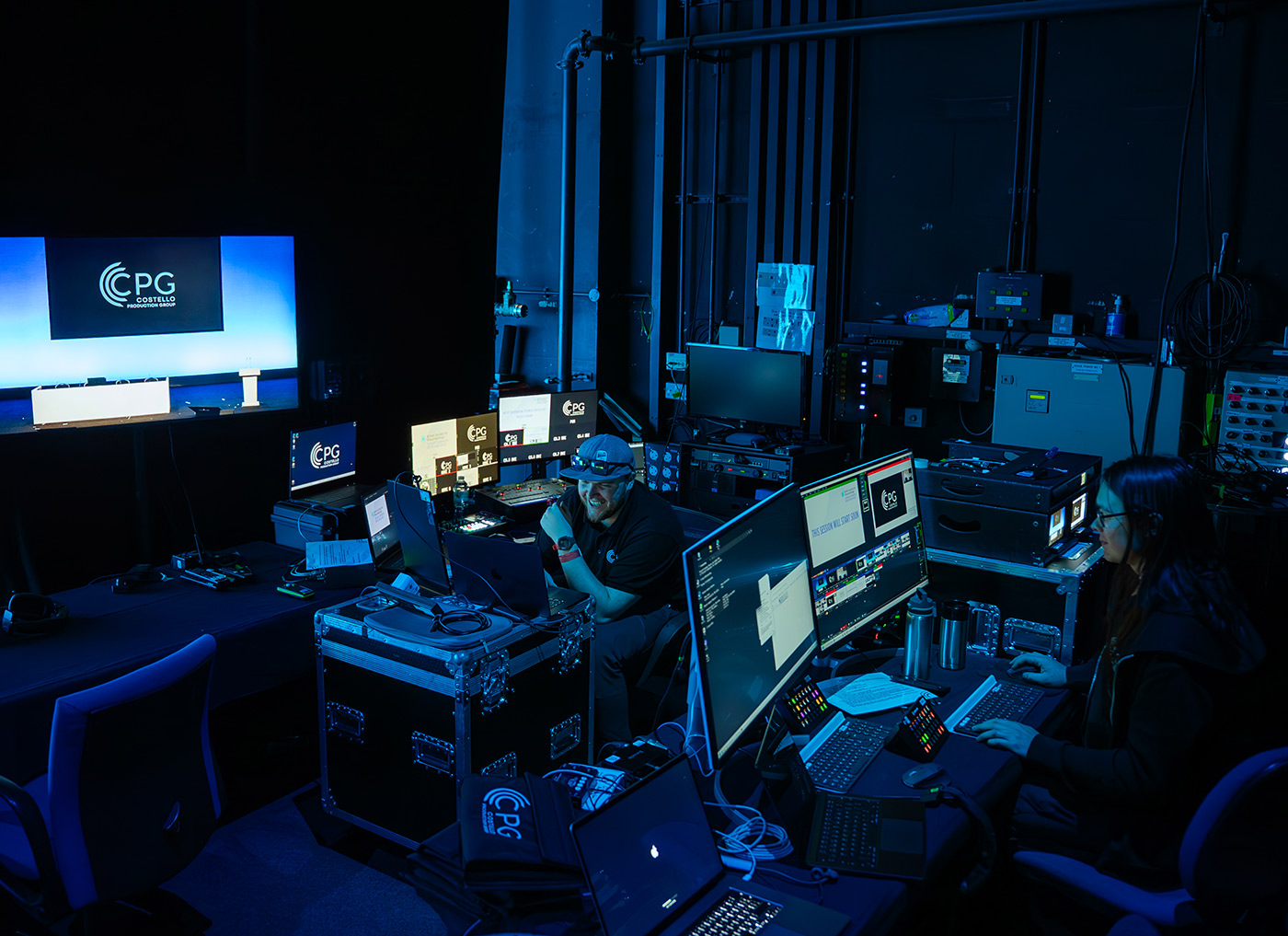
In event production, problems often announce themselves loudly, even when their origins are quiet.
A screen drops to black, a microphone cuts out, or a video refuses to play, and in the room, it feels as though something complex has failed without warning, drawing attention in a way no one wants. In my experience, that moment is almost never where the issue truly began.
I’ve been on both sides of that silence. Early in my career, I was the audio technician troubleshooting a wireless rack while a speaker waited on stage. Years later, I’ve stood at the back of the room as a founder, watching an entire event team pause, knowing that same familiar pattern is unfolding. The perspective changes, but the cause rarely does.
What we tend to describe as a sudden AV failure is usually the final expression of decisions made much earlier in the process. A presentation adjusted after sign‑off, a video handed over late during rehearsals, a technical run shortened because access was tight, or a last‑minute change that never quite made its way into the run of show. Each choice feels manageable in isolation, yet together they create a system that becomes increasingly fragile.
In-person events are precise by nature, even when the experience they create feels relaxed. They rely on clarity, alignment and timing, and they don’t cope well when those things begin to drift. When preparation is compressed, documentation falls slightly out of date, assumptions replace confirmation, and safeguards are quietly removed in the interest of speed. When something eventually fails, it wears the label of a technical issue, even though the root cause sits firmly within process.
True equipment failure does happen, and no amount of planning removes that entirely. But far more often, what’s perceived as an AV problem is really a process issue that has been allowed to develop unnoticed until it becomes visible to an audience.
Earlier in my career, I believed competence in event production meant being quick to fix things, staying calm under pressure and finding solutions in the moment. Over time, I realised that the most controlled events don’t rely on rescue at all; they are structured carefully enough that those moments never arise. That structure isn’t about pessimism or over‑engineering – it’s about respecting the complexity of in-person environments.
When those disciplines are in place, they don’t draw attention to themselves. The audience never sees them, and the event team rarely talks about them once the doors are open. What people do notice are the moments when something feels exposed, when silence lingers longer than it should, and when tension briefly enters a room that was meant to feel confident. If something appears sudden on show day, it usually wasn’t. It simply wasn’t addressed early enough to remain invisible.
At Costello Production Group, this understanding shapes how we approach event production at every stage. We spend a significant amount of time on the quieter parts of the process, tightening documentation, confirming versions, protecting rehearsal time and questioning assumptions before they have the chance to harden into risk. That work isn’t designed to impress, but it consistently creates space for calmer delivery.
When everyone knows exactly what they are working from, when changes are properly tracked, and when preparation is given the respect it deserves, the event itself becomes far less fragile. The show runs with confidence because the uncertainty has already been dealt with.
Those three seconds of silence rarely belong to the moment in which they occur. They belong to decisions made weeks earlier, long before an audience ever takes their seats. Good event production recognises that responsibility and addresses the cause while there is still time to do so.
If you’re planning in-person, virtual or hybrid events and want an event production company that prioritises clarity, structure and preparation as much as delivery, we’d be happy to talk.
Get in touch with CPG to discuss your next event.
Evan Costello, Founder of CPG